
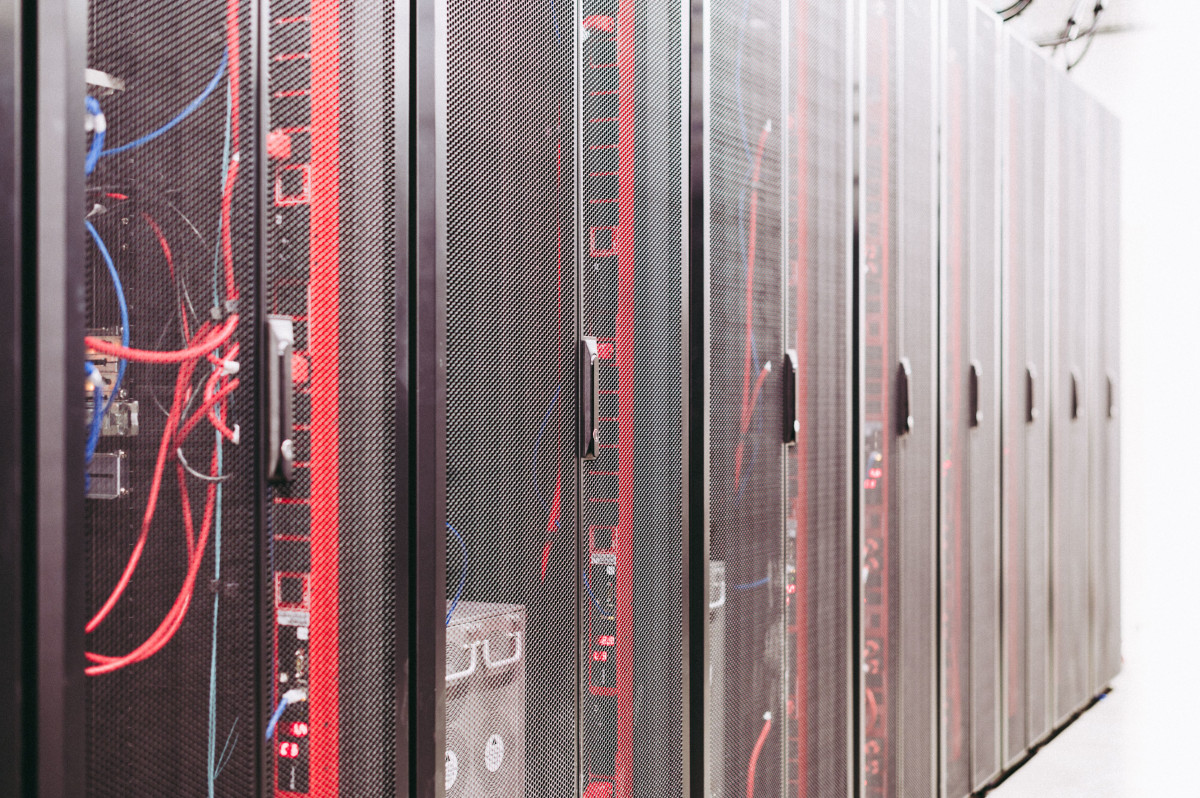
Here’s the harsh truth: AI data centers poison our environment. Whether it has to do with our air, water, habitats, or ecosystems, the impacts don’t go without consequences. But it’s not only Mother Nature who cries; it’s our own bodies too. Let’s take a deep dive into how AI data centers have been waging war on our health.
What’s the damage?
AI data centers contribute to sustained noise pollution. There’s the loud data center construction itself. The humming of rigorous cooling systems and air chillers, thunderous diesel generators, and the whirring of the fans inside also can’t be ignored. What makes this concerning is that these disturbances are leading to hearing loss. And it’s truly no surprise when we analyze the facts.
According to Dr. Elan Justice Pavlinich, PhD, AI data centers “generate noise levels that may exceed 90 decibels.” However, it’s also been shown that continued exposure to noise volumes above 70 decibels leads to hearing loss. Additionally, AI data center neighbors hear them from hundreds of feet around their location. As such, those living around data centers report headaches, vertigo, nausea, ear pain, higher blood pressures, and tinnitus.
Furthermore, AI data centers require all-night lighting, thus generating light pollution. But why is this risky for us? The answer lies in our circadian rhythm, the pattern that our bodies follow to regulate our sleep-wake cycles. Other important functions of circadian rhythm involve controlling hormone secretion, body temperature regulation, and the digestion of food.
In order to regulate the sleep-wake cycle, circadian rhythm releases respective hormones in response to light. When light enters the eye, melatonin (the hormone responsible for sleep) production stops. Thus, prolonged light exposure has negative impacts on the sleep of those living near AI data centers. This leads to insomnia, increased stress, and decreased quality of life. Sleep deprivation is dangerous, leading to diabetes, high blood pressure, metabolic disruption, heart disease, and dementia.
A threat to public health
Air pollutants generated by AI Data centers, namely nitric oxides, have some of the more terrifying consequences to human health. Nitric oxides exacerbate asthma symptoms, contribute to heart attacks, and can even lead to cognitive decline. According to the Agency for Toxic Substances and Disease Registry, low levels of nitrogen oxide exposure causes irritation to the eyes, nose, throat, and lungs. However, high nitrogen oxide exposure leads to more severe consequences. Such examples include reduced oxygenation of body tissues, a build-up of fluid in the lungs, and death.
It’s quite literally a deadly game. AI data centers drastically increase ambient air pollution, with diesel generators releasing “200 to 600 times more [nitric oxides] than a natural gas power plant producing the same amount of electricity”. Tiny particles at 2.5 micrometers or less in diameter also travel into the respiratory tract and the lungs, leading to premature deaths. Air pollutants spread far beyond their areas of emission. And since pollutants that are 2.5 micrometers or less in diameter are “non-threshold pollutants”, this indicates that there’s no level of exposure that is truly safe. What’s worse is that these pollutants created by AI data centers elevate the risk of cancer in nearby communities via secondary exposure.
Increased water insecurity
The impact of data centers on water insecurity cannot be shoved aside either. AI data centers require significant amounts of water for cooling purposes. Of course, this means that these data centers worsen water insecurity. This is especially true in areas that are already stressed. This lack of sufficient water has deadly consequences on human health as well. Elevated risks for waterborne infections (such as cholera, typhoid fever, hepatitis A, etc.), dehydration, and poor hygiene in affected communities all make for a dangerous combination of impacts. Hence, we must face a terrifying question: what happens when all clean water sources are exhausted?
Read more about these issues here.
Vulnerable communities suffer the most
The United States of America is the largest host of data centers. More specifically, the state of Virginia (which is known as “the data capital of the world”) has the highest number of data centers at 566. The construction of AI data centers has been driven by cost-minimization, causing them to cluster disproportionately in lower-income communities that often cannot afford to fight their construction. We also can’t ignore that because of the pollution these AI data centers cause, there seems to be patterns of localized climate degradation in vulnerable communities. This increases environmental disparities in these communities, which exacerbate costs of living and displacement of working-class populations. In other words, vulnerable communities are sacrificed from the outside-in. It is they who are left most prone to the dangerous health effects of AI data centers.
The link to environmental racism
Let’s not mince words: environmental racism is at play here, too. It is no secret that the United States has a dark history of targeting mainly BIPOC and low-income communities with pollution and toxic waste. The rise in AI data center construction in these communities is just the latest version, continuing the cycle with technological redlining and AI-gentrification. In 2014, it was the Flint, Michigan water crisis. In recent times, it is the predominantly Black neighborhood of Boxtown in Memphis, Tennessee, and its battle against Elon Musk’s xAI company.
The turbines placed in Boxtown have been emitting toxic nitric oxides as well as formaldehyde, causing worsening respiratory issues in the neighborhood. What is even more sinister is that this community already suffers from high asthma rates due to a history of environmental racism. With the infiltration of AI data centers, now they are being exploited more.
There are many more neighborhoods suffering just like Boxtown, not just in the United States, but globally as well. In India, for example, it is the rural villages that make most of their income through agricultural practices, which are facing the direst of consequences. The injustice has severe environmental, financial, housing, and health consequences. But the pattern becomes clear on who the targets usually are: those who have fewer resources to fight it.
When capitalism becomes deadly…
There comes a time when we have to question where we draw the line. When profit means more than global health and humanity, what kind of societies are we creating? Most of all, what kind of future awaits us? The data is clear: AI data centers are killing us slowly. The question now is: what are we going to do to stop them?
Check out:
Happy Earth Day! Now About That AI…
The Impact of GenAI Data Centers on American Communities, and What Can Be Done About It











Be First to Comment