
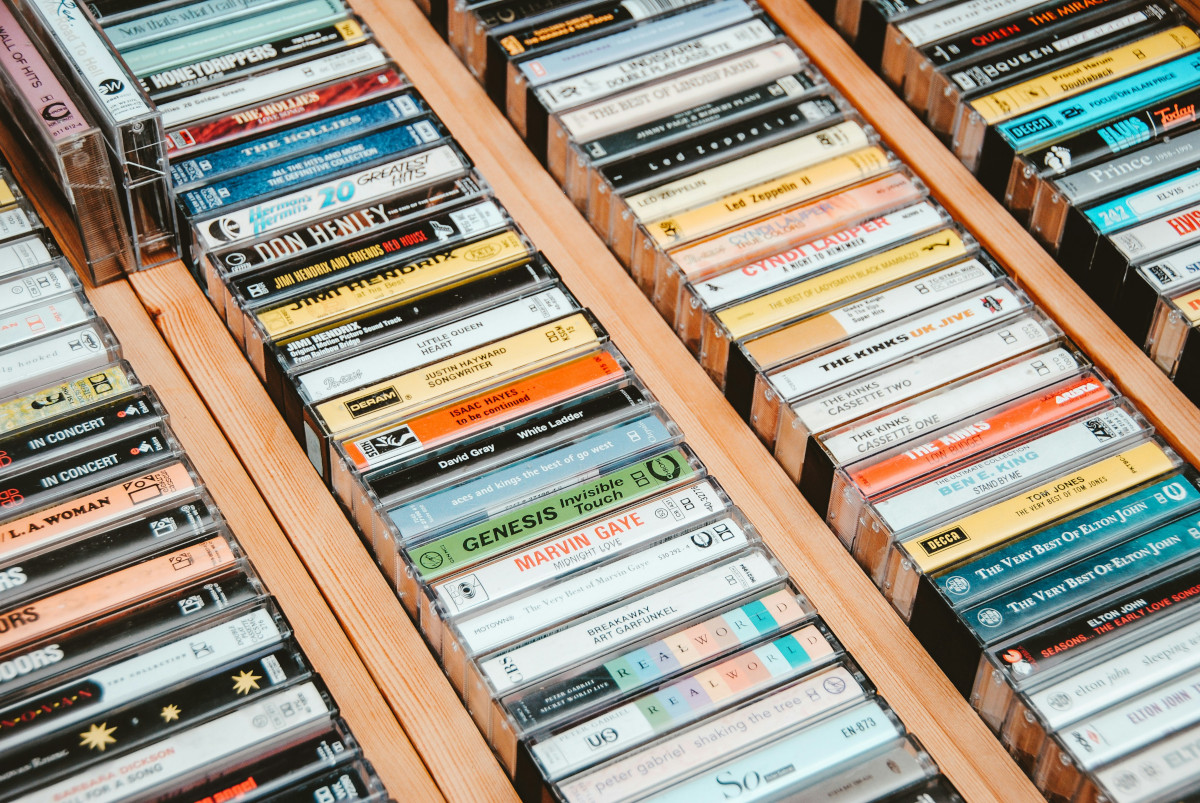
In the age of a rising digital world where we can find access to anything at the tip of our fingers (and most likely the swipe of a credit card too), it begs the question why physical media hasn’t died yet. In fact, it’s trending.
Pop culture is mainly responsible for sparking this new interest with cassette tapes being featured in Guardians of the Galaxy and Stranger Things in the mid 2010s, vinyls coming back as part of the retro trend in 2016, many popular artists releasing albums in CD and vinyl format in the early 2020s, VHS tapes and DVD’s trending on social media due to the current trends of collecting analog media, and so on. But there are various reasons why the interest has stuck around rather than fading within a month or so after the next trend arises.
A desire for ownership
Since the emergence of digital streaming in the late 2000s, the number of services to choose from has become overwhelming. Whether it’s shows, movies, or music, users are finding that nowadays they need to subscribe to multiple services to have access to everything they want to watch or listen to. On top of that, subscribing only grants a user permission to watch or listen to the content. They never actually own it. Even if a person purchases a movie or a show digitally, the provider can still remove it from their library if they lose the rights to distribute it, according to the League of Filmmakers.
The same goes for most content purchased digitally because people are only purchasing a license to access the content rather than the content itself. This includes the digital versions of books, magazines, video games, podcasts, and audiobooks on top of shows, movies, and music.
It’s a harsh misconception to learn.
Sick of losing access to things after the provider either loses or decides to sell the rights for them, many users have begun to cancel most, if not all, of their subscriptions and turn to physical versions of media.
Ownership in a physical format, like a DVD, VHS tape, CD, vinyl, cassette, game cartridge, or a physical paper copy, provides people the security that it won’t be taken away, altered, or stuck behind another paywall, and it is theirs to access whenever they like.
Though ownership is not the only reason people have started turning to physical media, the trend towards a completely digital world has.
Digital exhaustion
When was the last time you remember spending an entire day without looking at a screen?
Right now, we are living in a digital world that keeps getting more digital by the day. Whether it’s doom-scrolling on the multiple social media platforms we’re on, remote school or work, gaming, streaming shows, movies, and music, or reading eBooks and digital news articles, we are constantly looking at screens. Psychology Today says that people spend about “five to six hours a day looking at our smartphones,” and it’s wearing us out.
Specifically, it’s the pressure to always be immediately reachable and information overload that’s doing the most damage, according to an article on Medium. Updates, advertisements, news, text messages, emails, and it goes on and on. All day, every day. It’s not really allowing people to have any downtime, which is creating this rising problem of burnout from digital exhaustion.
Physical media gives people a break from all that because it requires actions that encourage us to slow down and become more intentional. And when we aren’t being pulled in a hundred different directions, we are becoming more involved in the entire experience of consuming media used to provide.
Sitting down and plugging a game into the TV, flipping the pages of a physical book, or browsing a selection of CDs. These are the types of experiences we lose with a username, password, and a simple click of a button. Instead, we can disconnect with physical media and allow ourselves to either remember or romanticize a simpler time.
Nostalgia and the vintage allure
For many people who grew up with these physical formats of media, rediscovering them or building on an already existing collection gives them a chance to relive a part of their past. On the other hand, younger generations who didn’t grow up with these media formats are romanticizing them while still growing up in a very digital-centered world.
Both groups are leaning into the different versions of nostalgia.
Physical media and the nostalgia attached to it were driving factors of the retro trend in the mid-2010s, which evolved into the current vintage aesthetic present ten years later. Considering this deep connection to some popular trends, along with the other circumstances surrounding its resurgence, physical media has been able to stay relevant enough to stick around a while longer.
In this world of constantly developing technology, it would seem that people’s reaction to the new digital format of media would follow suit with the reaction to the new physical media formats: out with the old, in with the new. In some ways, it did. Though none of it ever went completely obsolete.
This Medium article mentions that “tangibility is trust,” and that is a very relevant statement regarding our relationship with the physical and digital worlds. Even though the popularity of physical media is nowhere near what it was at its heyday, the younger generations have shown us that they are not disappearing anytime soon.
Check out:
Factors that have Sequels Dominating the Box Office
The History of Abortion Rights in the U.S., and What it Tells Us






Be First to Comment