
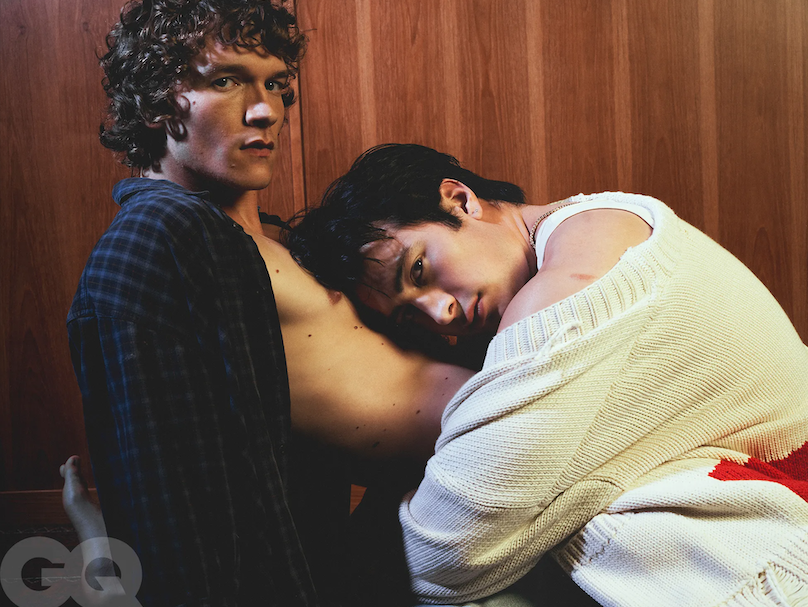
In a moment of global and political turmoil, Heated Rivalry provides more than entertainment; it’s a symbol of hope. This sense of relief doesn’t come out of nowhere; it’s shaped by an increasingly volatile global landscape.
Since the release of Canadian gay hockey series Heated Rivalry in November 2025, several geopolitical events have unravelled foundations previously set in stone. More public figures were named in the Epstein files, the U.S. leadership of NATO deteriorated the organization’s credibility, and the Danish prime minister promised the end of the NATO military alliance if the U.S. acted on Trump’s plan to take over Greenland.
The news cycle is now full of round-the-clock reports of the Iran War, continued genocide in Gaza, and endless tariffs. And that instability isn’t limited to foreign policy – it’s mirrored domestically in rising hostility toward marginalized communities.
The Advocate reported that over 1,042 anti-LGBTQ+ attacks occurred in 2025. Many of these incidents happened during Pride events, which undoubtedly discourages more people from attending. Over half of those were targeted toward trans people.
In 2026, Heated Rivalry matters not just as a romance, but as a cultural counterweight to political hostility, industry instability, and a long history of tragic queer narratives.
Queer media vs. the world
Heated Rivalry provides a welcome escape to queer viewers while simultaneously educating non-queer viewers. To understand how this climate shapes media reception, it’s worth looking at the rhetoric from those in power.
Mehmet Oz, the anti-gay Administrator for the Centers for Medicare & Medicaid Services, is at the forefront of an assault on Minnesota. This involves spreading unfounded claims about Medicaid fraud in order to flex power, according to a public policy professor at Georgetown University. The president also appointed the anti-trans Linda McMahon to Secretary of Education while his son, Donald Trump Jr., claimed that trans people are more dangerous than Al-Qaeda and the Taliban.
Recently, the State Department passed new visa rules requiring immigrants to identify their sex assigned at birth. This will expose trans people to increased scrutiny, documentation delays, and deportation. The House passed a bill making it a federal felony – up to 10 years in prison – for parents and providers to offer gender-affirming care. In 2025, 126 anti-trans proposals became law across 29 states. These target removal of gender identity protections, legal recognition, child safety, trans healthcare, and bathroom access.
Despite reports that viewers felt the series encouraged them to come out, the popularity of Heated Rivalry, according to a Boston civil rights group, has resulted in homophobic harassment in school hockey teams.
Instances like this are disappointing but important to understand in this conversation, especially for Heated Rivalry viewers not part of a marginalized community. Simply being a fan of the show can make you aware of the cultural climate.
Queerness vs. hockey
Sports doesn’t have a positive history with queerness, but we’ve seen progress with some pro athletes coming out. The NFL supported National Coming Out Day in 2020 and has had 16 openly LGBTQ players. In baseball, the MLB has had three openly LGBTQ players and 11 in the minor league. Almost every MLB team hosts Pride Nights, dating back to 1998.
The NHL has never had an openly LGBTQ player. Pro hockey players have come out in Finland and Canada, but the closest the U.S. has come is NHL draft prospect Luke Prokop who came out in 2021.
While the NHL website now hosts Pride Month videos, their support is perhaps more transparently revenue-motivated. After Heated Rivalry gained a massive following, the NHL encouraged fans to attend games. François Arnaud, who plays Scott Hunter in Heated Rivalry, commented on this: “I hope that the league… using the show for… selling tickets… follows through and supports openly.”
Brock McGillis, the first openly gay men’s professional hockey player, says that people dismiss homophobia as locker room talk. In the 2021-2022 season, Hockey Canada reported referees calling 415 penalties due to discrimination regarding sexual orientation and gender. By 2024-2025, that rose to 611.
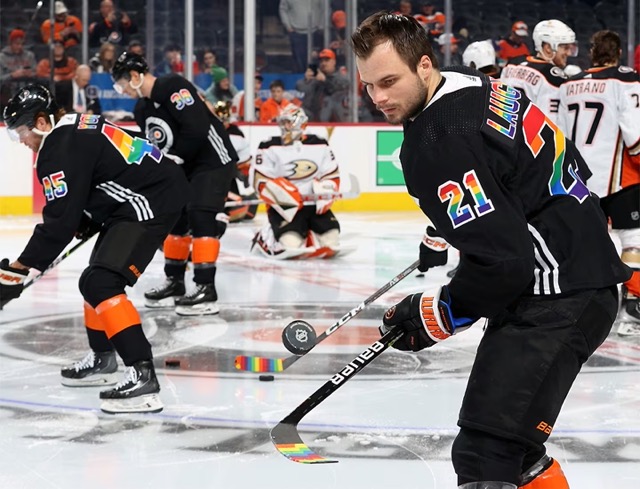
In 2023, the NHL banned Pride Tape and themed jerseys, which supported LGBTQ fans as well as other groups including anti-cancer initiatives and the military. When some players refused to wear pride jerseys, the NHL commissioner removed themed jerseys and Pride Tape entirely, as they were apparently distracting.
The ban ended after 10 days of not only fans and advocates protesting, but also NHL players themselves. During the ban, Coyotes defenseman Travis Dermott ordered rolls of Pride Tape and continued to use it regardless.
Heated Rivalry‘s hopeful narratives
Instead of bullying and slurs, Heated Rivalry showcases a type of homophobia that is quiet and unassuming. For example, in a scene that takes place during the 2014 Sochi Olympics, a hockey player named Carter comments on how men who figure skate are brave because people will assume they’re gay. Shane also encounters heteronormative expectations in a scene where his mother tries to get him to go out and meet a woman (specifically a Swedish princess).
The show also integrates time skips, taking us from 2008 to 2017. In this time period, the U.S. made some LGBTQ progress. Don’t Ask Don’t Tell was repealed in 2010 and same sex marriage was legalized in all 50 states in 2015. Despite this, these were still difficult times for LGBTQ globally. In 2009 GLSEN reported that 9 of 10 LGBTQ kids experienced harassment in school. Medical journals found that LGBTQ youth were significantly more likely to attempt suicide.
Russian officials let violent homophobia slide during the Sochi Olympics in February 2014. The previous June, Putin signed into law an anti-LGBTQ “propaganda” law. From beatings to arrests of teenagers who dared to come out, this law meant a brutal regime. We see this reflected in Heated Rivalry when Ilya tells Shane that if he is with him, “I wouldn’t be able to go home again. Ever. Because Russia. I would not be able to go back to Russia.”
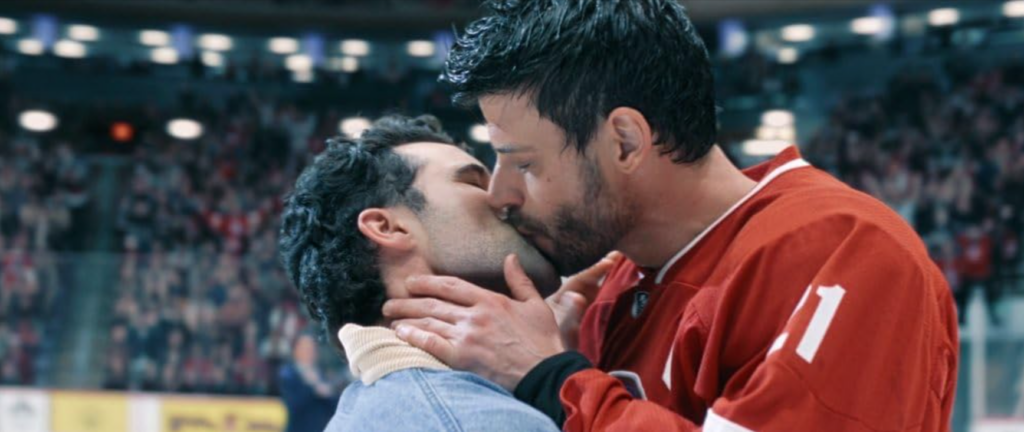
Later, Scott Hunter puts aside his reservations and comes out by kissing his boyfriend Kip on the ice after a big hockey game. This changes Shane’s and Ilya’s lives, as Ilya decides to spend the summer at Shane’s cottage, effectively beginning a relationship. There’s no doubt Heated Rivalry is someone’s Scott and Kip kissing on the ice moment. When it comes to Heated Rivalry, being yourself is cool to both the characters and the audience.
Refusing queer tragedy
There is no queer tragedy in Heated Rivalry. The source material, Rachel Reid’s Game Changers book series, is in the romance genre, and by industry definition has a happy ending. However, many viewers panicked between weekly Heated Rivalry episodes, afraid something bad would happen to the characters. Some of that anxiety could have stemmed from unawareness of romance novels. Some could be because audiences are so used to seeing gay characters die that they can’t believe a queer ending could be happy. That’s what makes Heated Rivalry’s narrative choices feel so radical.
In February, New York Times critic Wesley Morris expressed pleasant surprise at the show’s positivity. He initially resisted the idea of watching Heated Rivalry, stating that as a gay man he was so used “to neglect, to exploitation, to death.” Morris states that queer people have gotten too familiar with films associated with violence, repression, or loss, specifically naming Cruising, The Talented Mr. Ripley, and Brokeback Mountain.
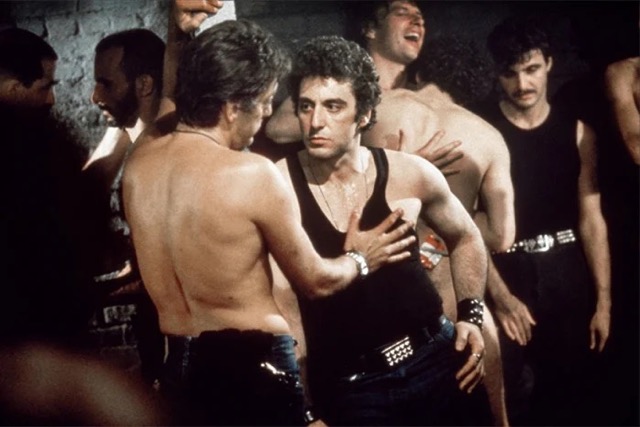
We’re so used to tragedy that it seems unreal for a queer romance to be so popular and joyous. That reaction – surprise at joy – is exactly why Heated Rivalry feels so important right now. Tierney said that the show’s “very existence is an act of rebellion” and “we deserve to have a gay show that is sexy and horny and fun.”
Drag Race’s Katya would agree, having posted about needing a “hot gay fantasy that doesn’t end in assault, murder, or AIDS.”
A hit despite all odds
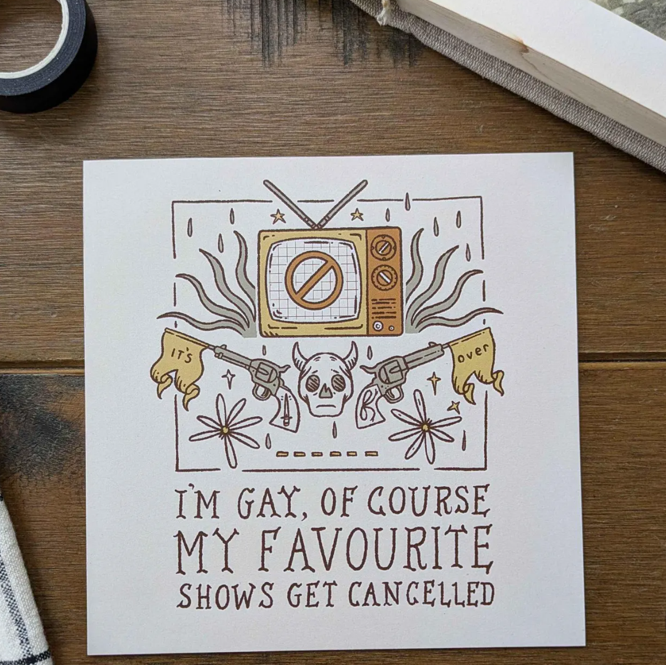
The show’s success is more striking when you consider that it brings joy to a broader media landscape that frequently takes queer characters away. GLAAD’s 20th “Where We Are on TV” report found that 41% of all LGBTQ characters on screen between June 2024 and May 2025 would not be returning, whether due to cancellation or a show ending.
HBO’s acquisition of Heated Rivalry made the show accessible to more people. However, it’s worth noting that between 2020-2023, HBO Max was the biggest offender for canceling shows. In addition, networks cancel queer shows at over double the rate of their non-queer counterparts (53% vs. 22%). Queer TV also had three times the average early cancellation rate, being axed both more often and sooner.
Queer TV cancellations happen so frequently that people from different fandoms bond over the same fate befalling their favorite characters, boosting one another’s petitions to try to bring their shows back. In this way, Heated Rivalry is both a blessing and a reminder of the curse on queer TV.
After Heated Rivalry caught fire, Crave renewed it for a second season just two weeks after its premiere. In this context, Heated Rivalry isn’t just successful – it’s rare. This show matters so much right now because it gives hope that smaller artists and queer stories can succeed. This is especially important as Paramount inches closer to completing an HBO buyout, which would leave one conservative man in charge of a large portion of media.
A Canadian show filling an American gap
Part of what makes Heated Rivalry possible is where and how it was made. Originally produced by Canada’s Bell Media, the show received $3.1 million CAD of its $5 million CAD-per-episode budget from the Canadian Media Fund (CMF). The CMF provides grants in the millions of dollars to Canadian productions, including Crave.
This public funding, broadcast contributions, and subscriber fees are what helped Bell Media – owner of Crave and one of Canada’s largest media and broadcasting companies – commit to Heated Rivalry’s budget. The Canadian Radio-television and Telecommunications Commission (CRTC) does not censor content as the FCC in the U.S. does. Crave is also an online streaming service and meets the Online Streaming Act qualifications.
The creators also noted this variation in censorship and anti-LGBTQ sentiment. Francois Arnaud mentioned how the U.S. would never have greenlit the show. Director Jacob Tierney added that if it was made in America, we’d probably wait all season to see a kiss. Even when we do get romances, they either end with a kiss or a cancellation.
In the footsteps of Queer as Folk
Heated Rivalry isn’t unprecedented, but it is part of a rare lineage of shows that break through cultural resistance. There were no gay sex lives on TV before Queer as Folk. This 1999 U.K. series was brought to the U.S. in 2000 to much fanfare and media focus.
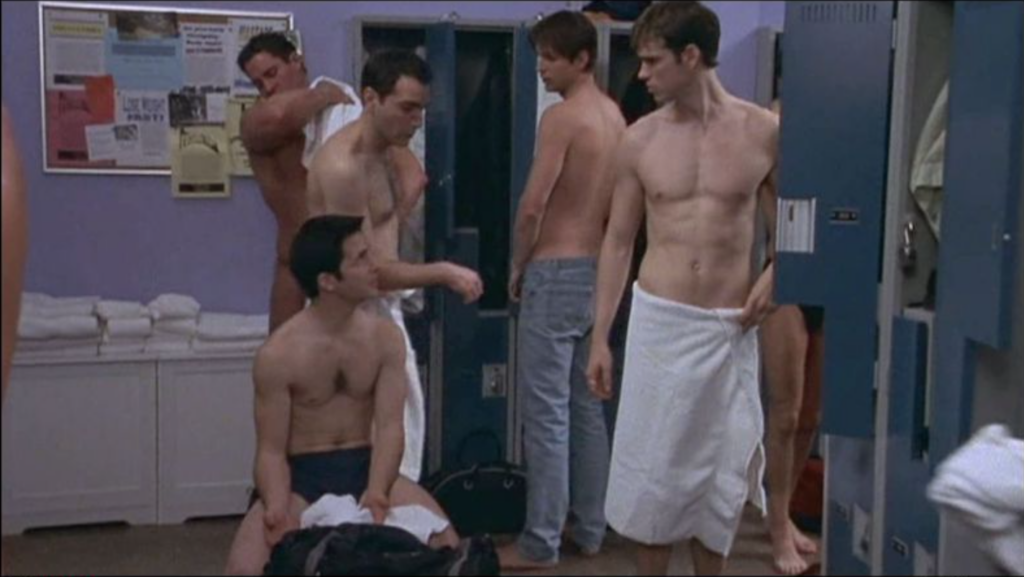
Queer as Folk U.S., also filmed in Canada, was probably the last show to be so explicitly queer. Queer as Folk was very popular, reaching #1 on Showtime despite people fearing it was too explicit for TV.
Like Heated Rivalry, Queer as Folk also emerged during a particularly troublesome time. The show premiered in December 2000, in the middle of the 36-day legal battle over the Florida presidential election which ended up in the Supreme Court. Then, of course, was September 11th, 2001 followed by the 9-year Iraq War. 25 years later, another show centering queer joy is here to take our minds off of bureaucracy and worse.
Actors, creators taking us seriously
The joy of Heated Rivalry doesn’t just come from what’s on screen; the people behind the scenes reinforce it. Some of the Heated Rivalry craze is due to the good sportsmanship and intelligence of its cast.
The Heated Rivalry actors are comfortable covering many topics that other casts would not be willing to engage in. The two main leads in particular, Connor Storrie (Ilya Rozanov) and Hudson Williams (Shane Hollander), have no qualms discussing the show and its link to sexuality, gender, and the romance genre. They balance a sense of humor with thoughtful responses, and this public discourse can help normalize queerness.
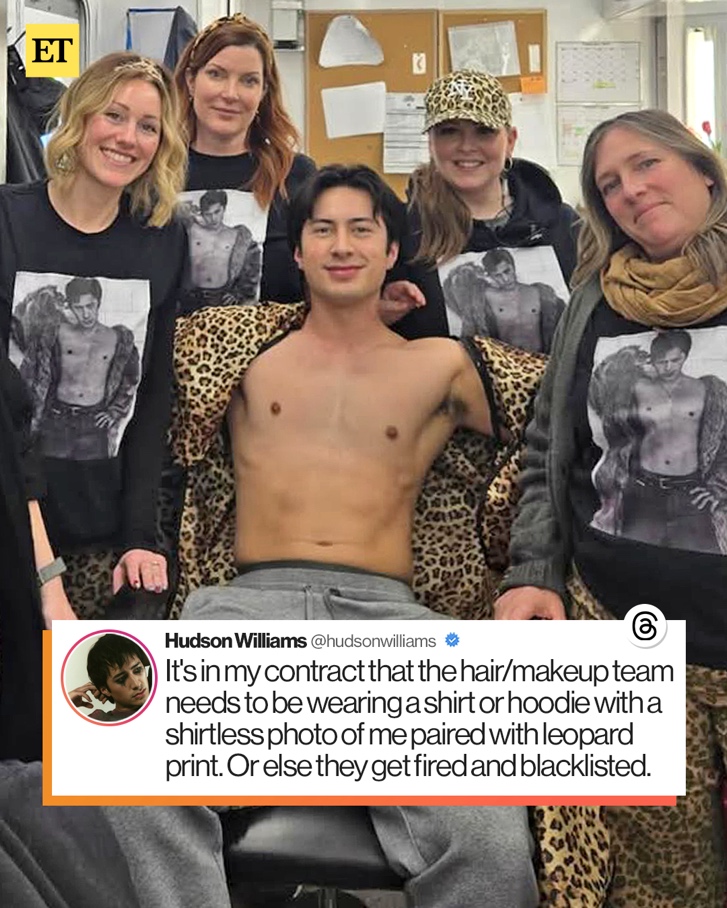
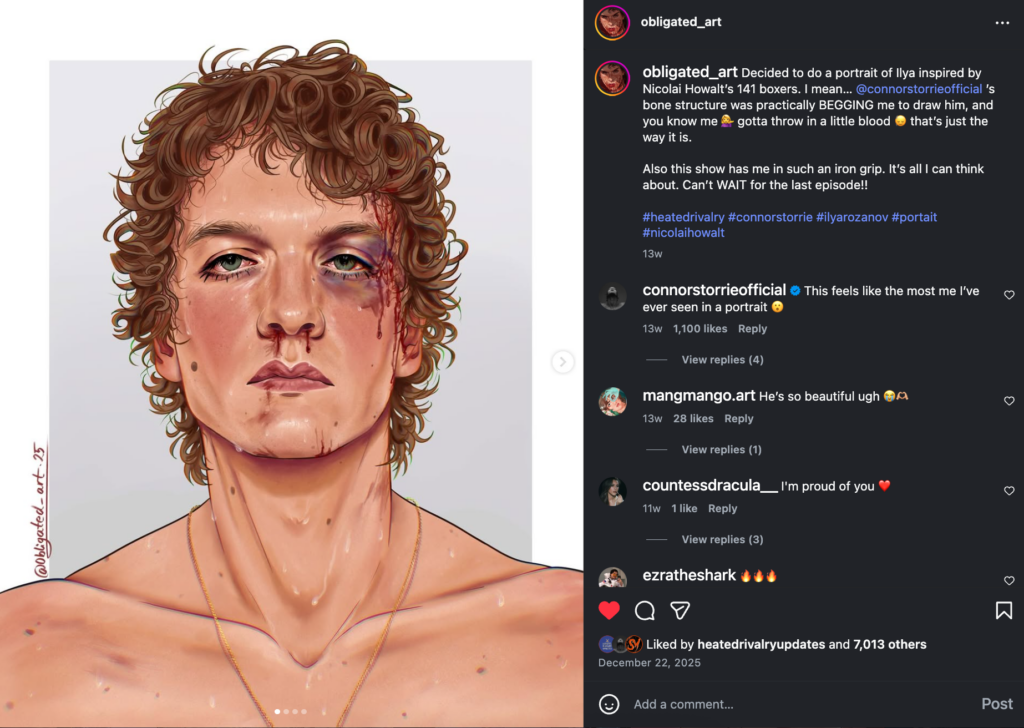
They also normalize queerness by interacting with fans. Examples include Storrie commenting on fan art of him and the below photo featuring a comment from Williams replying to a fan asking how this photo came to be.
Refusing pigeonholing
From Thirst Tweets to rapid fire questions and replying to more fan comments, Storrie and Williams are faced with a stream of promotional content on top of industry events while their stars rise at exponential speeds. From inside jokes to touching one another during interviews, they push back on the narrative that queer-friendly men can’t be friends without it meaning something more.
Williams discussed how it’s frustrating for people to pick apart his relationship with Storrie just for being loving and affectionate: “I feel taboos around just exploring physical intimacy with just people you admire and love without people, especially in western culture, of like, ‘Oh they’re fucking…’”
François Arnaud, who plays Scott Hunter, also expressed frustration regarding the persistent topic of his costars’ sexualities. Arnaud, the only out member of the cast, released a joint statement with Williams about keeping hate out of the fandom: “Don’t call yourself a fan if you share racist/homophobic/biphobic/misogynist/ageist/ableist/parasocial/bigoted comments of any kind.”
Jacob Tierney, the queer writer/director who adapted the story for TV, was quick to answer a question about the cast’s sexuality: “I don’t think there’s any reason to get into any of that stuff.” Arnaud also spoke out about this intrusion, mentioning people bullying Heartstopper star Kit Connor out of the closet.
This pressure can come from fans who feel entitled to personally know a celebrity who they do not know. It can also stem from wanting queer actors to play queer characters so non-queer actors aren’t taking queer roles. While it’s normal to chase representation, it’s just as important to let people explore themselves on their own time.
Breaking containment: queer media in the mainstream
The show’s reach extends far beyond its core audience. The first two episodes came out a few months ago, but the series has cemented its place in queer history. Shortly after Saturday Night Live aired a Heated Rivalry skit, they invited Connor Storrie to host SNL. The lead actors also quickly booked appearances on talk shows, award shows, and even the Winter Olympics,
Before these awards shows and promotional appearances, the show had already attracted interest and obsessions from fellow actors. Andy Cohen and Anderson Cooper discussed it with Brandi Carlile before the 2026 New Year’s ball drop, Andrew Scott called into a podcast to congratulate Connor Storrie on the show, Kerry Washington bought an “I’m Coming to the Cottage” candle off Instagram, Peppermint and Laverne Cox were hooked on the shower scene, and Miley Cyrus expressed interest in making music for season 2. Together, these moments signal something new and welcoming: a queer show not confined to niche audiences, but embraced across mainstream culture.
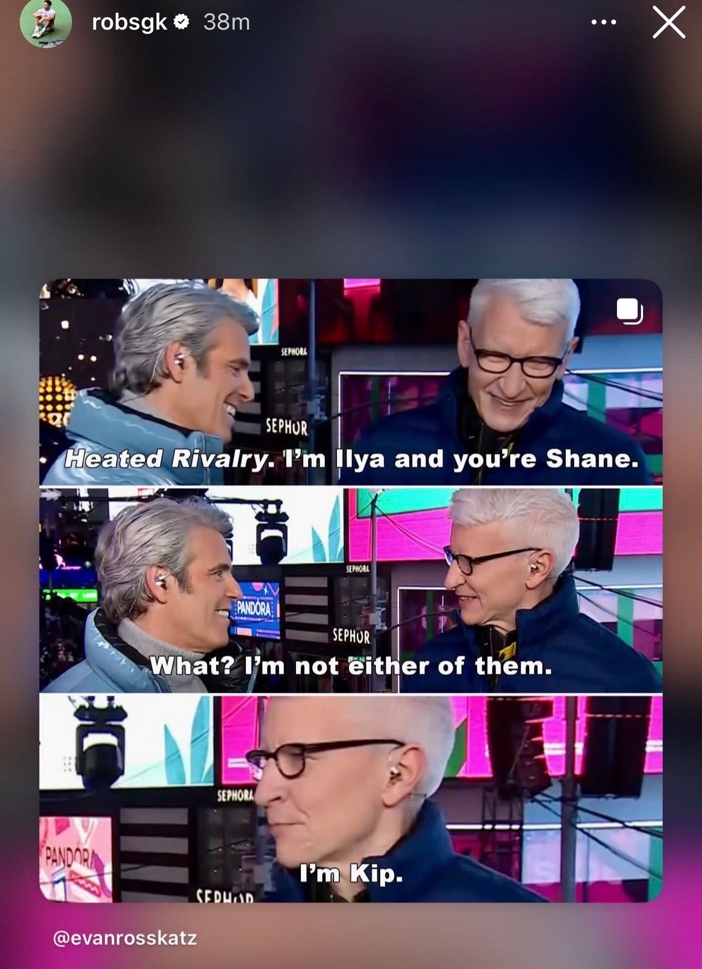
Just the other day, the MLB made a post teasing a Heated Rivalry collaboration that will come to Fenway Park sometime this summer.
This type of notoriety for such a centrally queer show is anything but typical. It earns Heated Rivalry an important place in not just queer TV history, but in the entertainment industry as a whole. Sparking conversations and memes alike, t’s the perfect balance of fun and intellectual.
The fandom explosion
The clearest sign of the show’s cultural impact isn’t just in its ratings or celebrity endorsements, but in how audiences have responded. People aren’t simply watching this show and moving on; they’re building communities around it in real time. What’s emerged instead is a network of fan-driven events that transform the show from a piece of media into a cultural experience.
Themed events began to appear everywhere. Heated Rivalry trivia nights have popped up in cities all over the country, drawing crowds eager to meet other fans. Some organizations have even used the opportunity to fundraise for local causes at charity trivia events.
Most notably, the rise of the “Heated RivalRave” tour demonstrates just how far the fandom has extended beyond passive viewership. These events blend fan edits, music, and dance into something closer to a concert or club experience than a traditional fan gathering. Costume contests, watch parties, and even Heated Rivalry-inspired SoulCycle sessions further illustrate how fans integrate the show into their lives.
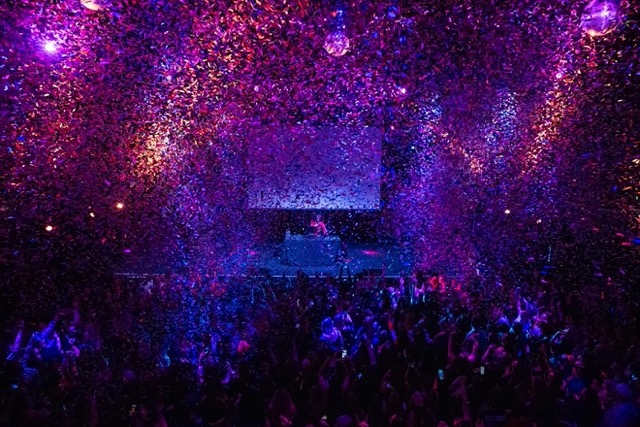
Of course, as a rapidly growing fandom, there has been uncomfortable parasocial behavior toward the cast. Increased visibility has brought instances of toxicity, including racial harassment. This reflects a broader pattern seen across online fandom culture, where accessibility and scale can sometimes outpace community norms. Still, these issues exist alongside the overwhelmingly connective power of the fandom.
Ultimately, the Heated Rivalry fandom underscores a key point: representation does not stop at the screen. In a time marked by political hostility and cultural fragmentation, the show has become a catalyst for real-world community building. Fans are not just watching it; they are living it, sharing it, and collectively transforming it. In 2026, this kind of connection is both meaningful and necessary.
Conclusion: A reminder to keep making queer stories
Heated Rivalry is the show we need right now because it reminds us that in a world on fire, queer stories can still be hits, emerging talent can still blow up, and as dire as it sounds, good things can still happen to good people.
The creators and cast have brought us an important message: don’t give up on your queer stories. When writing Heated Rivalry over 7 years ago, Rachel Reid didn’t expect this this wildfire response. But the reaction to this show gives a clear message to creatives: write what you want to see even if you don’t think it’ll trend. And then push to have it shown the way it should be.
As sex therapist Ken Howard wrote, “In times like these, romantic stories are not frivolous. They are psychological shelter.”
Check out:
“All of Us Strangers” and Straight Actors Playing Queer Roles”
“AMC’s Interview With the Vampire is the Show We Need in 2025”





Be First to Comment